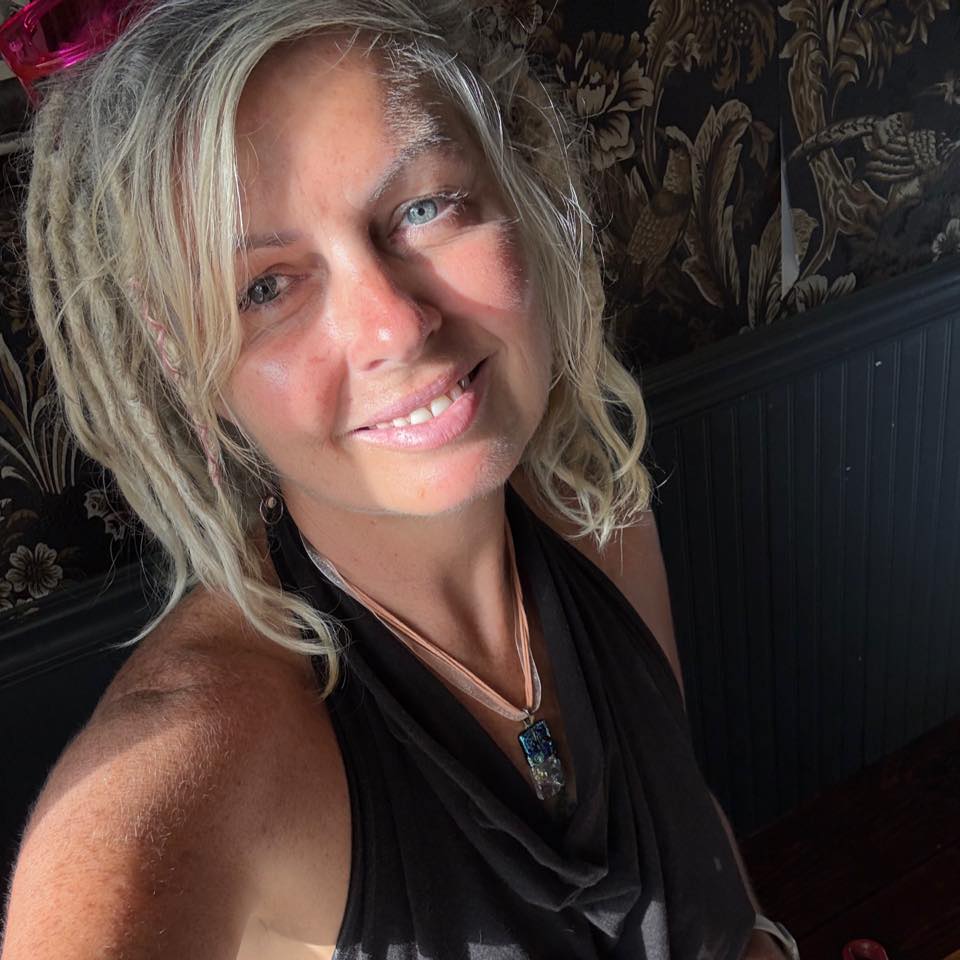
Janet Florence
NLP Life Coach · Founder, The Up Collective
Your brain has been building a story about who you are since before you could speak. That story feels like truth. It feels like fact. It feels like the most solid, certain thing you know. It isn't. It's a model — and models can be rebuilt.
This is not a motivational statement. This is neuroscience. And once you understand it — really understand it, not just intellectually but in your body, in your gut — it changes everything about how you see yourself and what you believe is possible for your life.
Let's talk about how your brain actually works. And then let's talk about how to use that knowledge to become someone new.
The Brain Is Not a Camera. It's a Storyteller.
Most of us walk around assuming that our perception of ourselves is accurate — that when we think I'm not smart enough or I'm the kind of person who always self-sabotages or I don't deserve good things, we are reporting a fact about reality. We are not. We are repeating a story that our brain constructed, usually a very long time ago, based on limited and often distorted information.
Here's what's actually happening: your brain receives somewhere between 11 million and 40 million bits of sensory information every single second. It can consciously process about 40 of them. To manage this impossible gap, your brain does something extraordinarily clever and extraordinarily dangerous — it filters. It deletes information that doesn't fit the existing model. It distorts information to make it consistent with what it already believes. It generalizes individual experiences into sweeping rules about how the world works and who you are in it.
This is called your map of reality. And in NLP, one of the most foundational principles is this: the map is not the territory. The story your brain tells about you is not you. It is a representation — incomplete, filtered, and shaped by experiences that may have happened decades ago, to a version of you that no longer exists.
Where the Self-Image Comes From
Your self-image — the deep, largely unconscious set of beliefs you hold about who you are — was built primarily in childhood. Not because childhood is uniquely important in some mystical sense, but because that's when your brain was most plastic, most impressionable, and most dependent on the people around you to tell it what was true.
A parent who was critical, even occasionally, even with good intentions, planted seeds. A teacher who dismissed you in front of the class planted seeds. A moment of failure that felt catastrophic at age nine planted seeds. A culture that told you — through a thousand subtle and not-so-subtle messages — that women like you had a ceiling planted seeds.
Those seeds grew into beliefs. Those beliefs became filters. Those filters shaped every experience you've had since, quietly confirming what you already "knew" about yourself and quietly discarding the evidence that contradicted it. This is called confirmation bias, and your brain runs it automatically, all day, every day, without your permission or your awareness.
The result is a self-image that feels immovable — not because it is, but because it has been reinforced so many times, for so many years, that it has the weight of absolute truth. It doesn't feel like a story. It feels like a fact of nature. Like gravity. Like something you were simply born with.
You weren't. It was built. And what was built can be rebuilt.
What NLP Actually Does
Neuro-Linguistic Programming gets a lot of bad press, some of it deserved, because it has been co-opted by a certain kind of hustle-culture self-help that promises overnight transformation through power poses and affirmations. That's not what I'm talking about.
At its core, NLP is a set of tools for examining and changing the structure of your internal experience — the way you represent the world to yourself, the language you use to describe yourself, and the unconscious patterns that drive your behavior. It works not by telling you to think positive thoughts, but by helping you understand how you think, and then giving you practical methods to change the patterns that are keeping you stuck.
One of the most powerful of these tools is called reframing. A reframe doesn't change the facts of a situation. It changes the meaning you assign to those facts — and as we've already established, the meaning is where all the power lives.
Here's a simple example. A woman comes to me believing: I wasted the best years of my life. That belief is causing her enormous pain and paralysis. It's making every forward step feel futile, because if the best years are gone, why bother? Now, the facts haven't changed. Time has passed. Certain opportunities are no longer available. That's real. But the meaning — wasted, best, gone — that's a choice. A reframe might sound like: I spent years acquiring experience, resilience, and self-knowledge that I couldn't have gotten any other way. I am not behind. I am prepared. Same facts. Completely different trajectory.
This is not denial. It is not pretending. It is choosing a meaning that is equally true and infinitely more useful.
The Identity Shift: How It Actually Happens
Here's where most self-help gets it wrong: it tells you to change your beliefs first, and then your behavior will follow. In my experience — and in the research — it's actually the other way around. You change your behavior first, even slightly, even imperfectly, and the beliefs begin to shift in response.
This is because your brain builds its model of who you are primarily from evidence — from what it observes you doing. Every time you act in a way that is consistent with the identity you want to inhabit, you are giving your brain new data. You are, quite literally, rewiring yourself. Neuroscientists call this neuroplasticity. NLP calls it acting as if. The mechanism is the same: repeated behavior in alignment with a new identity creates new neural pathways, which gradually become the dominant pathway, which eventually becomes the new default self-image.
This is why I don't start coaching sessions by asking women what they believe about themselves. I ask them: What would the woman you want to become do today? And then I ask them to do that thing — not perfectly, not confidently, not with full belief that it will work — but to do it anyway. Because the doing is the evidence. And the evidence is what changes the story.
Three Questions That Will Crack Your Self-Image Open
I want to give you something practical to take away from this. These are three questions I use in my coaching work that have a way of getting underneath the surface story and touching the structure of the belief itself. Sit with them. Write your answers down. Don't edit yourself.
Question one: What is the earliest memory you have of believing this about yourself? If you carry a belief like I'm not enough or I always mess things up, trace it back. Where did it start? How old were you? Who was there? What happened? You are not looking for someone to blame. You are looking for the origin point — because beliefs that have an origin point are beliefs that were learned, and what was learned can be unlearned.
Question two: What has this belief cost you? Be specific. Not vague — specific. What opportunities did you not pursue? What relationships did you not allow yourself to have? What version of yourself did you keep hidden because this belief told you it wasn't safe to be seen? The cost is important, because the brain is motivated by pain and by gain. When you can see clearly what the belief has taken from you, the motivation to change it becomes visceral rather than intellectual.
Question three: Who would you be without this belief? Not who you would pretend to be. Not a fantasy version of yourself. Who would you actually, practically, concretely be — tomorrow, next week, in six months — if this belief simply no longer ran in the background? What would you do differently? What would you stop avoiding? What would you finally let yourself want? This question is the beginning of the identity shift. It is the first act of building the new map.
You Are Not Fixed. You Are In Progress.
I want to end with this, because I think it is the most important thing I can say.
The self-image you have right now is not a verdict. It is not a diagnosis. It is not a life sentence. It is the current version of a story that has been revised many times before and can be revised again. The brain that built the story you're living in is the same brain that can build a different one. It is designed for exactly this kind of change. It is, in fact, doing it constantly — every experience you have is updating the model, whether you're conscious of it or not.
The question is not whether you can change. The question is whether you're going to be intentional about it, or whether you're going to keep letting a story that was written by a frightened child in a difficult moment run the life of the powerful woman you've become.
You've already survived the thing that was supposed to define you. Now it's time to decide what actually does.