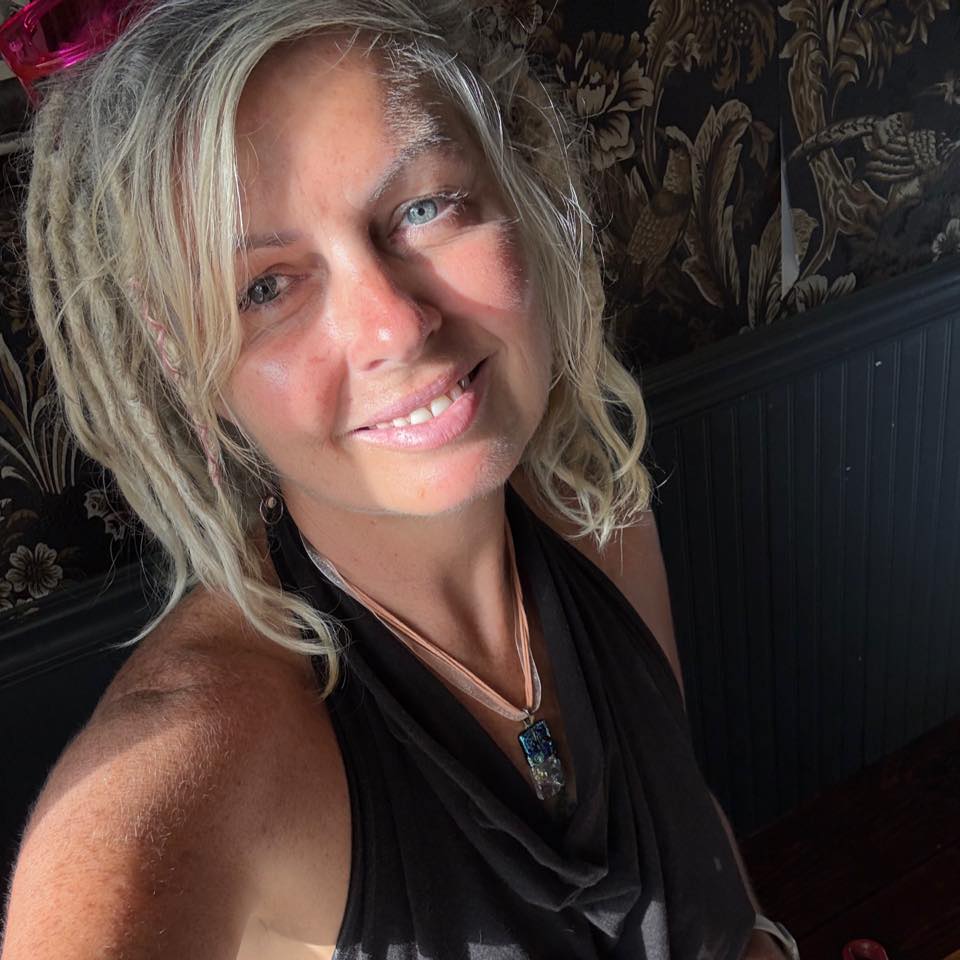
Janet Florence
NLP Life Coach · Founder, The Up Collective
The hardest part of overcoming a personal challenge isn't the challenge itself. It's the story you tell yourself about it — the one that says this is who you are now, permanently and forever. It isn't.
I know this because I've lived it. I've carried a label for nearly two decades that had nothing to do with the woman I was before it, and very little to do with the woman I became after it. But for a long time, I let it define me. I let it shrink me. I let it be the first thing I thought about when I woke up in the morning and the last thing I thought about before I fell asleep.
What I've learned — through years of rebuilding, studying, and eventually training as a coach — is that the story you tell yourself about your challenges is not a fixed truth. It is a choice. A deeply conditioned, often unconscious choice, but a choice nonetheless. And that means it can be changed.
The Difference Between What Happened and What It Means
NLP — Neuro-Linguistic Programming — makes a critical distinction that most of us never learn to make on our own: the difference between an event and the meaning we assign to it. Something happens. That's the event. Then our brain, in a fraction of a second, assigns a meaning to it based on our existing beliefs, our past experiences, and the stories we've been told about ourselves and the world.
The event is fixed. It happened. You cannot change it. But the meaning? That is entirely up for revision.
Think about two women who both go through a divorce. One walks away thinking, I am unlovable. I failed. I am damaged goods. The other walks away thinking, I survived something hard. I know myself better now. I am free to build something real. The event was the same. The meaning — and therefore the entire trajectory of their lives going forward — was completely different.
This is not toxic positivity. I'm not asking you to pretend the hard thing didn't hurt. It did. It may have been devastating. What I'm asking you to consider is whether the meaning you've attached to it is serving you — or whether it's quietly running your life from the background, keeping you small, keeping you stuck, keeping you from becoming the woman you're actually capable of being.
The Weight We Carry That Isn't Ours
One of the most painful things I've witnessed in my own life and in the lives of women I've worked with is how much of the weight we carry isn't even ours. It was handed to us. By parents who were doing their best with their own wounds. By systems that weren't designed for our healing. By a culture that is far more comfortable with women who are small and apologetic than women who are powerful and whole.
We absorb these messages early and deeply. You're too much. You're not enough. You should have known better. You made your bed. You'll never live this down. And then we spend years — sometimes decades — living inside the cage those messages built, never questioning whether the door was ever actually locked.
Here's the truth: most of the time, it wasn't. The door has been open. You just couldn't see it because you were so busy believing the story that said you deserved to be in there.
What Overcoming Actually Looks Like
I want to be honest with you about something, because I think the word "overcoming" gets used in ways that set women up to feel like they're failing at their own recovery.
Overcoming a personal challenge does not mean the challenge disappears. It does not mean you stop thinking about it, stop feeling the weight of it, or arrive at some permanent state of peace where it no longer affects you. That's not overcoming. That's erasure — and erasure isn't healing.
Real overcoming looks like this: you carry the thing, but it no longer carries you. You know the story, but you are no longer trapped inside it. You can look at what happened — clearly, honestly, without flinching — and say, That was part of my life. It is not the whole of it. And it is certainly not the end of it.
It looks like getting up on a Tuesday morning when you don't feel like it. It looks like making the call you've been avoiding. It looks like telling the truth about where you are instead of performing a version of yourself that's easier for other people to accept. It looks like choosing, again and again, to be the author of your story instead of its victim.
None of that is glamorous. None of it happens in a single breakthrough moment. It is slow, unglamorous, daily work. And it is the most important work you will ever do.
The Three Things That Actually Help
In my experience — both personal and professional — there are three things that make the difference between women who move through their challenges and women who stay stuck in them.
First: radical honesty about where you actually are. Not where you wish you were. Not where you think you should be by now. Where you actually are. This sounds simple and it is brutally hard, because most of us have spent years building elaborate systems to avoid looking directly at the truth of our situation. But you cannot navigate from a location you refuse to acknowledge. The map only works if you're honest about the starting point.
Second: a willingness to question the story. Not to dismiss it, not to bypass it, but to genuinely interrogate it. When you catch yourself thinking I can't do this or this is just who I am or it's too late for me — pause. Ask: Is this actually true? What evidence do I have for this? What evidence do I have against it? Who gave me this belief, and do I actually trust them with the authorship of my life? These questions are not comfortable. They are necessary.
Third: consistent, imperfect action. Not perfect action. Not action taken only when you feel ready, because you will never feel completely ready. Consistent, imperfect, sometimes terrifying action in the direction of the life you actually want. Every time you act in alignment with who you're becoming rather than who you've been, you are literally rewiring your brain. You are building a new identity from the inside out. This is what NLP calls "acting as if" — and it works, not because it's pretending, but because the brain learns by doing.
A Word to the Woman Reading This at 2am
If you're reading this in the middle of the night because you can't sleep, because something is weighing on you that you haven't told anyone about, because you're wondering if it's too late to change the trajectory of your life — I want to speak directly to you.
It is not too late. I know that feels like something people say. I know you've probably heard it before and it didn't land. But I'm telling you from the other side of a challenge that I genuinely did not know I would survive: the fact that you're still here, still asking the question, still looking for a way through — that is not nothing. That is everything.
The women who change their lives are not the ones who had it easiest. They are the ones who refused to let the hardest thing that happened to them be the last word. They are the ones who decided — quietly, stubbornly, sometimes furiously — that they were not done yet.
You are not done yet.
The work is hard. The work is worth it. And you don't have to do it alone.